

How To Install A Closure Piece With A Sew In
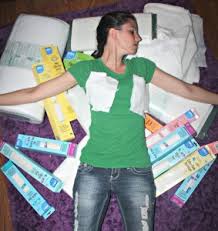
Today, I have the pleasure of talking about one of my most favorite things in the earth…interfacing! This post will be concentrated on the item Pellon Interfacings that I use while making bags. Interfacing makes upward 25% of my stash…no lie! It'due south one of those things that yous just need to have on hand at all times, because you lot'll use it in almost whatever projection – to make quilted items, bags, garments, you name it!Pellon interfacing is available in the U.S. If you are one of my friends in another country, I take put together this helpful interfacing conversion chart for Vilene interfacing that you might use when making a purse. For the purpose of this commodity, I volition refer to item Pellon interfacings, but experience free to glance at the chart to note the interfacing bachelor in your area.
| Pellon Interfacing | Vilene Conversion |
| 987F Fusible Fleece | H630 Iron On Lightweight Fleece |
| TP971F Fusible Thermolam | H640 Fe On Loftier Loft Fleece or 272 Thermolam |
| SF-101 Shape Flex Fusible Woven | G700 Woven Fusible |
| 520 Deco-Fuse Firm | S520 Business firm Interlining |
| 70 Peltex Sew-in | S80 Heavy Sew-in |
| 71F Peltex Unmarried-sided Fusible | S520 House Iron-on |
| 809 Decor Bail | H250 Fe-on |
I assembled this chart with the help of the lovely folks at Pellon.
Edit 10/01/14 – Pellon is now widely available in Australia under the Legacy brand. Many of the names and detail numbers are the same, with one pocket-sized change (for example, Fusible Fleece nether the Legacy make has number 50-987F, and so basically they are only adding an 'L' in front end of the original Pellon number). The primary alter is that Decor Bail nether the Legacy brand is L-809 Fuse-Northward-Shade).
So allow's get started! Note: always use a pressing fabric when fusing your interfacing to fabric! Pellon interfacing is also available in boxes of product, usually around 2-3 yards per box. You can come across examples of boxed interfacing in my photo higher up; nigh specialty quilt shops will stock the packaged interfacing!
Pellon 987F Fusible Fleece

Pellon 987F Fusible Fleece can be institute by-the-thou at your local fabric shop packaged on a bolt with a pale green label on it. It is fusible on ane side, which means you lot can feel the 'glue' on one side, and this is the side that should go against the incorrect side of your fabric. This interfacing has a bit of a loft to it. I like using information technology, but unremarkably reserve information technology for either the lining of a bag (to add extra body), for straps (so that they are padded, but without any extra bulk), for small-scale flaps, etc. I don't often use it for the exterior of a bag because I have found that over a large surface area, it tin perchance make the fabric look slightly crinkly because of the loft of the fleece.
Ane style that you tin shine out your material when using fusible fleece is to first fuse a layer of Shape Flex (which I'll talk about later) to the material, then follow it with a layer of fusible fleece.
Another swell use for fusible fleece is that you can cut small squares of it (approximately two″ x 2″) to reinforce a magnetic snap that you might exist using in your bag. Every time y'all open and close a magnetic snap, it puts pressure on your fabric. To resist confronting everyday wearable-and-tear, slide the prongs of your snap through your fabric, and then put the square of fleece on meridian before yous close the prongs. Yous shouldn't have any worries about your fabric tearing under the strain of the magnetic snap at present!
Pellon TP971F Fusible Thermolam

I absolutely love Thermolam. Information technology also comes on a bolt with a lite green characterization on it. It is also fusible on one side, so the tacky side should get against the wrong side of the fabric. Thermolam is fleece, but it is a needled fleece, which means it is denser and lies flat. It has a ton of uses. If I'm making a smaller quilted project like a mini quilt, mug carpet, or oven mitts, I use Thermolam before I quilt the project. Information technology eliminates the need for using pins or spray baster.
Only this article is for bag-making. When I'm making a bag or other accessory, I similar it to accept body. Even if I was making a simple tote bag, I would not exist happy if it was just two layers of cloth. Just too thin for me. I know it boils downwardly to personal preference, but if I make a bag, I want it to be able to acquit 20lb. without tearing at the bottom. It needs to experience like it has some substance to it.
So, if I am making a soft bag, I ever ever use Thermolam. I would, say, employ the Thermolam fused to the outside fabric of the purse, and possibly either Shape Flex or fusible fleece fused to the lining cloth of the handbag. Thermolam, one time fused, volition brand your material look nice and smooth. Depending on your iron, you might need to fuse it for a lilliputian bit longer than the manufacturer instructions (I'd suggest testing on a pocket-size piece offset if you've never used it before). I notice I sometimes need to iron information technology up to double the time equally directed. Another personal tip is that I like to fe it (misting with a flake of h2o) with the interfacing side toward my iron, and when I'grand sure information technology'southward properly fused, I like to flip it over and iron on height of the textile (with my pressing textile in identify, of course!). This will requite your fabric an incredibly flat and smooth look.
Pellon SF-101 Shape Flex Fusible Woven

I use this in 100% of my numberless. I might utilise it in different means, but bar none, information technology is the nearly important interfacing in my stash. I fuse Shape Flex to every single pocket that I make. I fuse it to facings in garments. I for sure fuse it to an surface area around a zipper to help reinforce that area. You tin can discover this interfacing in your local shop with a low-cal imperial label on the bolt.
Shape Flex will make a quilt-weight cotton have the experience, once fused, of a decor-weight or canvas-weight fabric. It will requite the fabric a bit of sturdiness. Equally with the previous interfacings, the rough tacky side should go against the wrong side of your fabric before ironing. It is perfect as a stand-lone interfacing if you are making a pocket-sized pouch or other smaller accessory. Y'all can fifty-fifty combine information technology with other interfacings. Someone asked me the other 24-hour interval what is the most interfacing I have used on one slice of textile, and the answer is three. I like to experiment a lot, and at that place is no correct or incorrect reply. I might use a layer of Shape Flex, i of Thermolam, and another of 520. I get a trivial crazy sometimes.
520 Deco-Fuse Firm

Although this interfacing is great, it is non widely available (I believe yous can get it at Hancocks and on their site on-line). If you are looking to make a very stiff pocketbook, then this is the interfacing for you. Even though it is very stiff, it is virtually every bit thick as a slice of structure newspaper, which makes it reasonably easy to stitch. Some other good thing about this interfacing is that in one case it is fused, it never has that 'fused' look. And so your textile will expect nice and smooth. Information technology also holds a finger press, and then I usually never have to iron any seams, I just apply my fingers.
Equally with any stiff interfacing, it can be tricky to maneuver your bag through your sewing car. I would strongly suggest cutting this interfacing 1/ii″ smaller than your fabric pieces, in order to reduce bulk in the seam allowance. I say sew slowly, and come up with creative ways to get the stitching done. For instance, if you have to sew one-half a line of stitching, cease, feed the bag in from the opposite side to continue stitching, do that. Honestly, no ane is going to see the wrong side of your bag, and so it doesn't have to be the prettiest stitching in the world (in my stance).
520 Deco-Fuse is a great fashion to get a shop-bought look to your bags. However, I remember that Peltex #70 sew-in interfacing is a perfect substitute (see below).
Peltex 70 Sew together-in

This interfacing is a little bit thicker than the 520 Deco-Fuse, and it is stiff equally well. It comes on a bolt with a yellow label. Because it is a sew-in interfacing, information technology will not fuse to your fabric. You tin can either baste the interfacing to your fabric using a small seam allowance, OR (and this is my favorite method)…you lot tin can cut a piece of Shape Flex that is the same size as your pattern slice. So cut a piece of Peltex sew-in from your design piece, but trim it ane/2″ smaller all the mode around. Eye the Peltex sew-in on the wrong side of your cloth, then place the fusible side of your Shape Flex on tiptop. When you fuse the Shape Flex, it will seal the Peltex sew-in along the one/2″ edges against your fabric. Having a smaller piece of Peltex sew together-in will also help to reduce the majority in your seam allowance.
The lesser of my Aeroplane Bags sewing blueprint, pictured above, has Peltex in it (the small printed panel on the bottom of the handbag). Since the bag was designed to conduct a weekend'southward worth of clothing or a featherweight sewing machine, I thought it was a necessity to have the lesser panel be extra-strong.
Another smashing reason to have some Peltex #70 around is for bag handle inserts. Some sewing patterns for numberless telephone call for you lot to create sort of a double-bias slice for each handle, meaning that your raw edges would not exist exposed. I cut a strip of ane-ane/two″ broad Peltex #70 for each of the handles in the bag below, and slide them into each handle piece before topstitching along each long edge. It makes the handles very stable. I've also used fusible fleece and Thermolam as handle inserts before. I suppose it but depends on what look you're going for, but any will work.
Peltex 71 Unmarried-sided Fusible
This interfacing is great when you want to fuse a small area of a project (such as the flap of a bag or clutch), simply I find that sometimes when you are using it on a larger surface area of a projection (for example, the exterior of a pocketbook), it *tin can* give the textile a 'fused' (aka crinkly) look.
It is a stiff interfacing like the Peltex Run up-in and the 520 Deco-Fuse. If you lot need a heavy/strong interfacing that you'd like to fuse, I'd recommend the Peltex Sew-in.
809 Decor Bond

I began using this interfacing quite a bit, tardily last year. If there are panels or handles of a bag that y'all would similar to requite a potent appearance to, only not want to look crinkly if you happen to fold or crease them, this is the interfacing for y'all.
Really, I use this interfacing in ii layers. I will start fuse a layer of Shape Flex against the wrong side of my material, and then follow up with 2 layers of Decor Bond. Withal, the Decor Bond I will cut approximately 1/2″ small-scale on all sides of the detail pattern piece, to keep bulk out of the seam allowance. The yellowish handbag higher up was made using this method; the green solid panels just had the Decor Bond layers, in society to assistance that top console stand up firmly.
You can also use a layer or 2 of Decor Bail if yous want your bag to stand upwards by itself, but not be as stiff as Deco Shape or Peltex.

Psssttt! Did you know that if you don't have any interfacing handy, Pellon Wonder Under (a fusible web) will plough any textile into a fusible interfacing? For instance, you can utilise Pellon Nature'southward Touch or Warm and Natural batting in place of Pellon Thermolam, or another quilting cotton in place of Pellon Shape Flex. How'south that!!
I hope this article has shed a little bit of light on bag interfacing. I know it'due south something that we don't talk about a lot, but we probably should, considering it's one of the things that sewers tin can find disruptive, and I become asked a lot of questions about it!
By Annie's Soft and Stable
Also, another favorite interfacing that I started using in 2022 and use in just nearly every handbag is By Annie's Soft and Stable. It is my heavy favorite, and if yous notice the bag patterns in my shop, you'll see that they were all made using Soft and Stable. I invite you to read my separate weblog postal service about Soft and Stable, and check out the video that I shot:
Many sewing patterns only name interfacing in generic terms: light-midweight interfacing, heavyweight interfacing, etc. That can make it sort of hard to navigate. To generalize, I would say, in my opinion, that for a light-midweight annotation, you can use Shape Flex, fusible fleece, or Thermolam. Heavyweight or stiff interfacing would be either of the Peltex or the Pellon 520 (possibly ii layers of Decor Bond). Again, others might have different opinions on this.
I have washed bags made out of simply about every interfacing. You can practice it, some just look a chip more than wrinkly than others (bring out the atomic number 26!). I'm not really a big fan of washing my bags, though, so I wouldn't practise it unless you had some sort of emergency (like grape juice).
There are no right or incorrect answers to using interfacing. I find that the all-time way to learn more about information technology is to use it in all of your projects…tweak your interfacing based on your personal preference: what kind of shape are you interested in, how much stiffness, what kind of body.
Feel free to ask any specific questions about interfacing in the comments! I will answer! If you are working with a certain pattern, feel gratis to let me know if you're dislocated on what interfacing to use, and I'll be glad to help yous navigate the waters!


Source: https://sewsweetness.com/2012/05/all-about-bag-interfacing.html
Posted by: calderaedwasind.blogspot.com
0 Response to "How To Install A Closure Piece With A Sew In"
Post a Comment